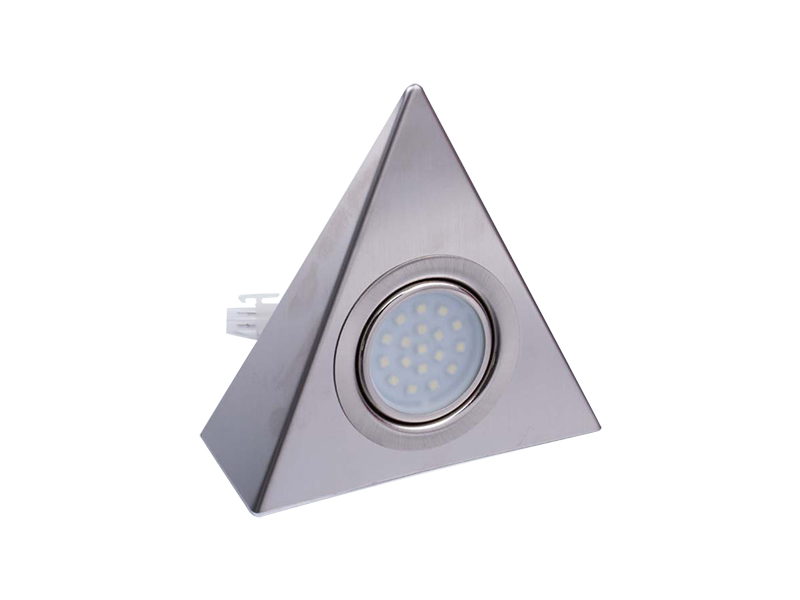
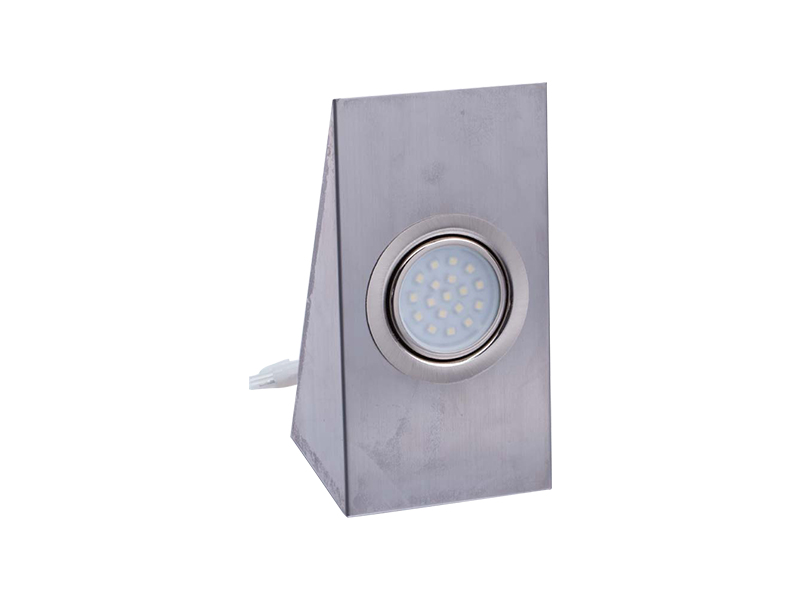
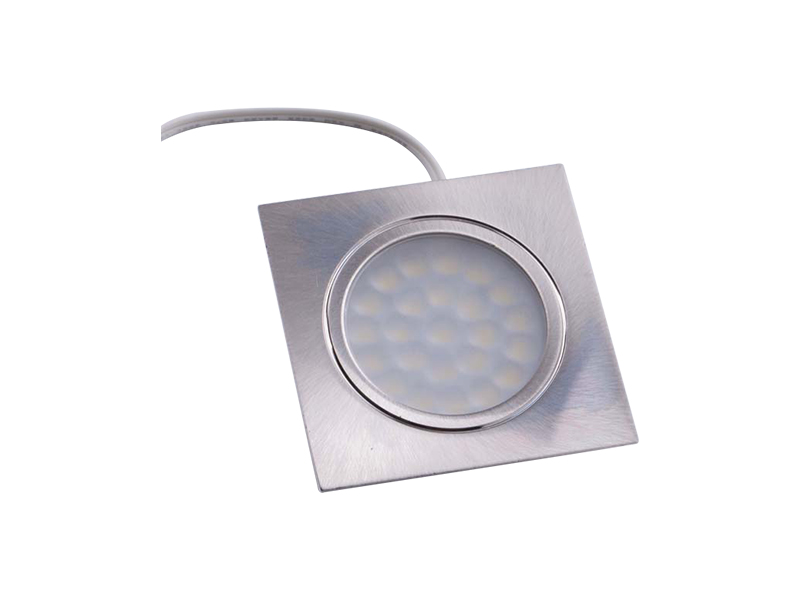
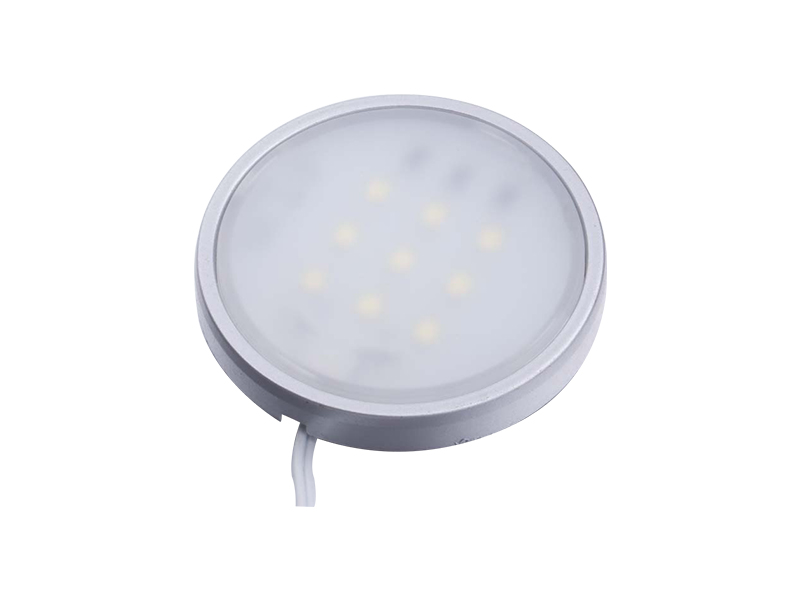
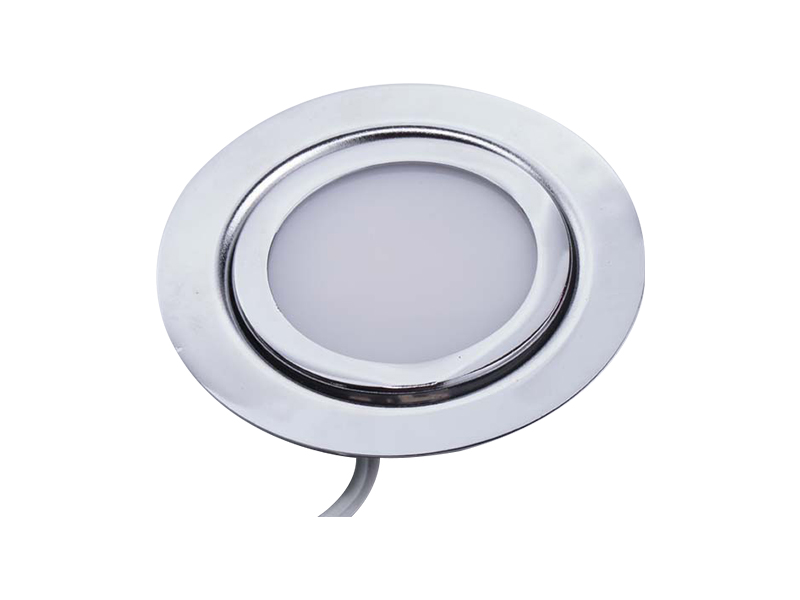
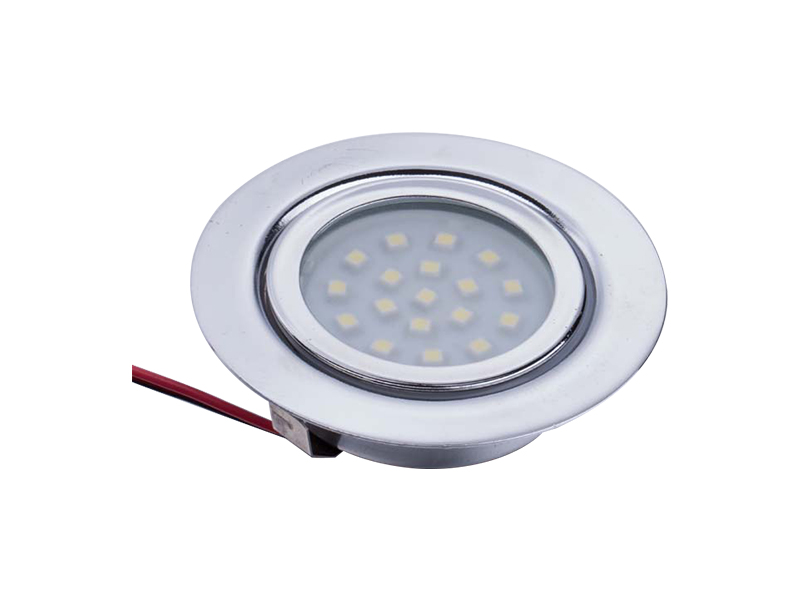
The Core Verdict: When specifying under LED cabinet lights for premium architectural environments, rigid LED bars deliver superior thermal management, zero-dot diffusion, and long-term structural alignment. However, flexible LED strips offer unmatched structural adaptability for complex geometries and significantly lower initial material costs. For high-end, high-use surfaces, rigid fixtures provide the optimal return on performance, while accent-heavy configurations leverage the spatial agility of flexible ribbons.
Structural Engineering and Thermal Dissipation Mechanics
The fundamental divergence between rigid bars and flexible strips within the domain of under LED cabinet lights lies in their core mechanical substrates. Rigid LED fixtures utilize an integrated aluminum extrusion housing that acts as a primary structural element and a highly efficient thermodynamic heat sink. The physical mass of aluminum provides a direct thermal pathway, drawing heat away from the surface-mounted diodes (SMDs). By maintaining a lower junction temperature, these systems mitigate the risk of accelerated lumen depreciation and chromaticity shift over extended operational periods.
Conversely, flexible LED strips utilize a flexible copper clad laminate (FCCL) printed circuit board. While engineered with thin copper layers designed to distribute thermal loads, the minimal physical volume of these strips limits their intrinsic heat-sinking capabilities. When mounted directly to non-conductive substrates such as standard wood or melamine cabinetry, the thermal energy generated by high-output SMDs becomes trapped. Without an auxiliary aluminum channel, this accumulation can degrade the adhesive backing, cause localized discoloration of the cabinet underside, and reduce the functional lifespan of the diodes by up to 40% when operated continuously at higher wattages.
Optical Uniformity and Photometric Performance
Achieving clean, dot-free illumination on highly reflective kitchen countertops—such as polished quartz, granite, or glazed ceramic tile—is a primary objective when designing under LED cabinet lights. Rigid bars are systematically manufactured with factory-integrated, snap-in polycarbonate lenses available in clear, frosted, or deeply opalized profiles. The precise physical distance maintained between the LED diode plane and the inner surface of the frosted lens allows for optimal light blending. This structural separation effectively eliminates the visual phenomenon known as hot-spotting, creating a perfectly continuous line of light.
Flexible tape lights present a distinct optical profile. When installed raw without an accompanying diffusion channel, the individual SMDs reflect clearly against polished counter surfaces, creating harsh glares and fractured visual patterns. While high-density flexible options like Chip-on-Board (COB) strips resolve this by using a continuous phosphor coating over closely packed diodes, traditional flexible tape remains highly sensitive to substrate irregularities. Any slight ripple or dip in the cabinet surface transfers directly to the flexible backing, resulting in an uneven, wavy beam pattern that compromises architectural symmetry.
| Performance Metric |
Rigid Aluminum Bars |
Flexible Strip Systems |
| Thermal Dissipation |
High efficiency via dedicated aluminum mass |
Limited; reliant on installation surface or external channels |
| Optical Diffusion |
Factory-calibrated, uniform zero-dot output |
Prone to pixelation unless paired with deep diffusers |
| Spatial Adaptability |
Fixed lengths; requires custom factory ordering for turns |
Field-cuttable every few inches; curves around geometries |
| Installation Velocity |
Moderate; clip-mounted or mechanical fastening |
Rapid; pressure-sensitive adhesive backing |
| Lumen Maintenance |
L70 rating often exceeding 50,000 operational hours |
Variable; highly dependent on ambient operating heat |
Spatial Adaptability and Field Customization Complexities
Where flexible strips lose ground in thermal and optical performance, they excel in handling irregular architectural layouts. Under LED cabinet lights frequently need to navigate complex paths, such as passing through blind corner cabinets, dropping down to lower shelving planes, or tracing curved under-cabinet lips. Flexible tape lights can be cut in the field at highly frequent intervals—often down to every 1 to 2 inches—and can make tight turns using low-profile ribbon-to-ribbon jumpers or soldering points. This agility simplifies on-site modifications, allowing installers to adjust to unexpected design variations without delaying project timelines.
Rigid LED bars operate under distinct physical constraints. These fixtures are typified by pre-determined modular lengths, usually distributed in standard 8, 12, 24, or 48-inch increments. If a cabinet bay measures precisely 33.5 inches, an installer cannot trim a rigid bar down to size without compromising the interior circuitry, end-caps, and wet-location seals. Resolving these dimensional gaps requires either ordering custom-fabricated lengths from the manufacturer or using a series of shorter linked modules. This approach can leave small, unlit spaces at the far ends of the cabinet run, resulting in slight drops in light coverage along the edge of the workstation.
Installation Protocols and Long-Term Durability Matrix
The mounting method chosen for under LED cabinet lights heavily impacts both the initial labor cost and the long-term reliability of the system. Flexible strips rely almost exclusively on high-bond, pressure-sensitive acrylic adhesive tapes applied to their backing. While this makes the initial placement fast and accessible, its longevity depends entirely on how thoroughly the surface was prepared. In high-moisture kitchen environments—where rising steam from dishwashers, kettles, and cooktops constantly affects the cabinetry—adhesive backings are prone to chemical breakdown over time. It is common to see unsupported flexible strips sag down over a few seasons, exposing raw diodes to direct view.
"Engineering reports indicate that under continuous thermal cycling, standard pressure-sensitive adhesives show a significant drop in holding power when exposed to ambient cabinet base temperatures over 45 degrees Celsius."
Rigid aluminum bars utilize mechanical mounting hardware, utilizing spring-steel clips, magnetic mount inserts, or direct countersunk screws that thread straight into the cabinet stiles. This mechanical connection remains unaffected by moisture, ambient temperature swings, or gravity. Additionally, the enclosed nature of rigid bars protects the internal electronics from airborne grease particles and cooking residues. In contrast, open flexible tape lights can accumulate dust and grease across their exposed solder traces, making them more difficult to safely clean without damaging the circuit pathways.
Electrical Configuration and Lumens-per-Watt Efficiency
From an electrical engineering standpoint, both systems require external direct current (DC) power supplies, typically standardizing around 12V or 24V topologies. However, the voltage drop characteristics differ markedly between the two form factors. Flexible strips, due to the incredibly thin copper traces within the flexible PCB, incur a measurable voltage drop over long linear runs. For example, a 24V flexible strip extended beyond 16 linear feet without a new power feed will show a distinct drop in lumen output at the far end of the run. This requires complex wiring configurations, such as home-running multiple lines back to a centralized driver box.
Rigid bars overcome this limitation by using internal heavy-gauge copper bussing or thicker glass-reinforced epoxy FR4 circuit boards. This allows for long series connections with minimal voltage drop. This stability translates directly into superior operational efficiency, frequently producing up to 110 lumens per watt compared to the 85 to 95 lumens per watt typically achieved by standard flexible equivalents. Consequently, for extensive commercial installations, rigid systems can lower total energy consumption while maintaining bright, uniform task illumination across large work surfaces.


 English
 Español
 中文简体
中文简体