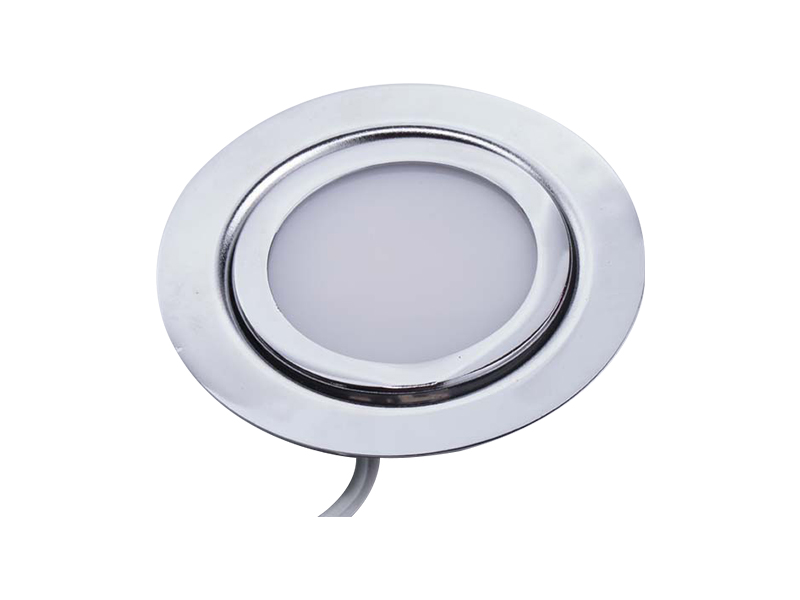
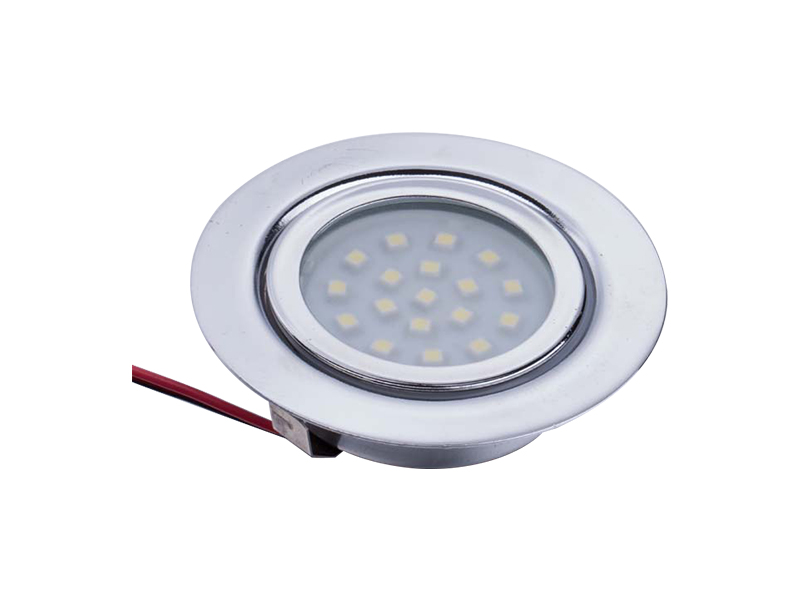
The Mechanics of Shadow Reduction: Maximizing Task Visibility and Luminous Efficacy with Low-Profile LED Cabinet Lights
The Photometric Functionality and Targeted Luminance of Under-Cabinet Solid-State Systems
Integrating low-profile led cabinet lights directly into millwork, retail display cases, and medical workstations provides an optimized solution for eliminating the deep counter shadows caused by overhead ambient lighting fixtures. By mounting solid-state light matrices under upper cabinetry shelving, these configurations transform dark workspaces into highly functional, uniform work areas. This engineered placement delivers a luminous efficacy exceeding 90 lumens per watt while consuming less than 15% of the power required by legacy halogen puck systems. This technical setup ensures excellent visibility with minimal heat transfer, preserving temperature-sensitive items inside storage spaces while focusing illumination exactly where it is needed.
In modern spatial design, providing adequate illumination for work surfaces requires looking closely at spatial constraints and optical accuracy. Standard ceiling downlights project illumination from behind the user, casting unavoidable shadows right onto counters, cutting boards, or display surfaces. Low-profile, under-cabinet solid-state components solve these coverage gaps by bringing the light source closer to the work surface. These systems protect delicate woodwork from thermal damage by enclosing high-density diode arrays within specialized aluminum extrusions that absorb and vent heat safely.
Optical Engineering, Color Rendering Specs, and Counter Beam Angles
Achieving clear visibility across a long counter space depends on picking high-fidelity diode phosphors, choosing efficient diffusers, and selecting the correct beam angles.
Maximizing Spectral Fidelity for Material Accuracy
Standard commercial lighting strips often distort natural textures and colors by overemphasizing yellow wavelengths. To provide the visual clarity needed for commercial food prep, jewelry displays, or laboratory tasks, premium under-cabinet systems are engineered with rich, deep-phosphor recipes to achieve a Color Rendering Index (CRI Ra) of 93 or higher, alongside a strong R9 red value above 85. This spectral precision prevents visual distortion, allowing users to accurately evaluate material textures and fine details.
Beam Angle Control and Glare Prevention
Because high-gloss countertops like polished quartz or stainless steel reflect light like a mirror, bare diodes can create blinding hotspots. To counter this glare, modern fixtures use frosted PMMA diffusers that bend and smooth the light. By spreading the light out over a wide 100-degree to 120-degree beam angle, the fixtures distribute illumination evenly across the entire depth of the counter, eliminating harsh reflections and dark spots.
Comparative Design Evaluation: Continuous Linear Tape Extrusions vs. Segmented Recessed Puck Fixtures
Designing a millwork lighting layout requires balancing linear uniformity against accent positioning, processing depth limitations, and thermal load controls. The table below outlines the core differences between these two common cabinet configurations.
Table 1: Photometric Uniformity, Woodwork Processing Demands, and Thermal Dissipation Comparison Matrix
| Technical Design Parameter |
Continuous Linear Tape Extrusions |
Segmented Recessed Puck Fixtures |
| Luminous Uniformity Profile |
Exceptional (Unbroken line of light avoids pooling) |
Scalloped (Creates alternate bright cones and dark gaps) |
| Millwork Modification Requirements |
Minimal (Requires only a shallow, narrow router channel) |
Intensive (Demands large circular hole-saw boring) |
| Heat dissipation Efficiency |
Superior (Aluminum track spreads heat across a long area) |
Moderate (Traps concentrated thermal energy inside deep bores) |
| Application Suitability |
Long workspaces, prep counters, and inventory shelving |
Isolated artwork displays, curios, and floating alcoves |
| Visual Conspicuousness Index |
Invisible (Ultra-thin 8mm profile stays hidden from view) |
Visible (Thicker housings can poke down below trim lines) |
The technical data shows why long linear profiles are favored over puck designs for large workspaces. Linear tape housings deliver seamless, unbroken light across the entire depth of a counter, preventing the alternating light cones and dark spaces common to spaced-out puck fixtures. Segmented pucks are still a useful tool for highlighting specific objects in display curios, but their concentrated beam patterns fall short over active work surfaces. In addition, linear systems spread out heat across an extended aluminum channel, keeping localized temperatures low and protecting delicate wood adhesives from drying out.
Advanced Low-Voltage Integration and Smart Proximity Automation
Modern millwork lighting relies on low-voltage DC power distributions and smart automated switches to maximize safety and responsiveness.
- Safe 24V DC Internal Distribution: Operating lines on a 24-volt DC current reduces the risk of electrical shock and allows for thinner, discreet power wiring inside cabinet corners. This lower voltage also minimizes voltage drop over long runs, keeping brightness completely uniform from the first diode to the last.
- Hands-Free Infrared Proximity Swapping: Miniature infrared sensors can be installed flush into the bottom of a cabinet, allowing users to turn lights on or off or dim them with a simple wave of a hand. This hands-free control keeps switches clean when working with messy materials.
- Magnetic Door-Activated Reed Switches: For interior pantry or deep drawer storage, tiny magnetic sensors can be mounted inside the door frames. Opening the door breaks the magnetic contact, instantly lighting up dark shelves and automatically shutting off when closed to save energy.
Step-by-Step Mechanical Routing and Electrical Wiring Sequence
Because retrofitting hidden lighting requires precision routing and neat wire management, installation teams follow a strict assembly protocol.
- Router Depth and Dimension Tuning: Set a plunge router to the exact width and depth of the aluminum track (e.g., 12mm wide by 8mm deep), cutting a straight channel along the bottom of the cabinet panels.
- Aluminum Track Press-Fitting and Securing: Clean out wood dust from the channel, apply a thin bead of structural adhesive, and press the aluminum profile into place, securing it with countersunk screws to ensure a flush finish.
- Diode Ribbon Sizing and Adhesion: Cut the high-density LED ribbon to length only along its marked cut lines. Peel off the adhesive backing and press the strip firmly onto the aluminum track to ensure solid thermal contact.
- Discreet Low-Voltage Wire Routing: Drill small 4mm holes through the hidden corners of the cabinets, leading the low-voltage lead wires back to a centralized power supply enclosure.
- Driver Hardwiring and Diffuser Installation: Snap the frosted acrylic diffuser lens onto the aluminum track. Wire the input side of the constant-voltage driver to a switched AC source, turn on the power, and check for uniform light output.
Mitigating Thermal Degradation and Managing Voltage Drop Weaknesses
Even premium low-voltage solid-state systems can suffer from early diode burnout or uneven end-to-end brightness if they are installed without proper heat management or correct wiring calculations.
Preventing Thermal Backing Degradation
Thermal degradation happens when high-power flexible LED ribbons are stuck directly onto bare wood or laminate surfaces without an intermediate metal backing. Wood acts as a natural thermal insulator, trapping heat around the delicate diode junctions and causing the chips to lose brightness quickly or shift color. Installers can easily prevent this heat wear by always mounting light strips inside dedicated aluminum extrusion tracks, which act as efficient heat sinks to keep operating temperatures safe and stable.
Controlling Tail-End Voltage Drop
Voltage drop occurs when a low-voltage circuit runs too far in a single continuous line, causing the diodes at the far end to receive less power and look noticeably dimmer. This uneven brightness ruins the seamless appearance of long display or counter runs. Engineers eliminate this tracking issue by limiting continuous single-fed lines to 5 meters or using parallel power feeds from a central driver, ensuring consistent, balanced current reaches every single diode across the workspace.


 English
 Español
 中文简体
中文简体