LED Bathroom Light Buying Guide: Types, Brightness, and Features to Consider
Standing in front of a mirror after a hot shower, with condensation still forming on the glass, is the moment most homeowners realise their bathroom lighting was chosen by accident. A single ceiling globe throws hard shadows across the face, and a halogen wall fitting radiates more heat than useful light. Replacing either with a properly specified LED bathroom light changes the room more than any other single improvement. LED fixtures deliver the same brightness on about one-quarter of the energy, run cool enough to touch, and are available with features that solve real bathroom problems such as fogged mirrors and dark corners. The practical decision, then, is not whether to use LED, but which specification matches the room, the mirror, and the habits of the people using it.
Why LED Replaced Halogen in Bathroom Lighting
Halogen mirror lights were the default for decades because they are compact, emit a warm colour, and dim smoothly with simple controls. What they cannot change is physics: roughly 90 percent of the electricity they draw becomes heat rather than visible light. In a small bathroom, that heat builds up quickly, and the glass capsule stays hot minutes after switching off — a real burn risk.
An LED bathroom light removes these trade-offs. A 10-watt LED module produces about 800 lumens, the same output as a 45-watt halogen capsule, while keeping the surface cool and the energy bill low. With rated lifetimes of 25,000 to 50,000 hours, an LED mirror light installed today will still be running when the surrounding tiles are due for replacement.
Energy consumed to produce approximately 800 lumens. Lower is better.
Typical rated lifespan under normal operating conditions.
LED vs halogen characteristics for bathroom mirror lighting
| Attribute |
LED bathroom light |
Halogen bathroom light |
| Wattage for 800 lumens |
9–12 W |
45–50 W |
| Surface temperature |
Cool to the touch |
Hot; burn risk |
| Rated lifespan |
25,000–50,000 hours |
1,500–2,000 hours |
| Heat load on the room |
Low |
High |
| Dimmability |
Good with a compatible driver |
Naturally smooth |
Brightness, Colour Temperature, and CRI: Reading the Label
Watts measure consumption, not output. The three numbers that matter on an LED bathroom light are lumens, colour temperature, and CRI.
- Lumens tell you how much light a fitting emits. For a small to medium bathroom, plan for 800–1,200 lumens of general light plus 600–1,200 lumens aimed at the mirror. That is enough for shaving, applying makeup, and grooming without a separate ceiling downlight.
- Colour temperature sets the mood. 3000K is the most common choice for LED bathroom lights because it warms skin tones and suits most finishes. 4000K looks crisper but can make faces appear pale; 2700K suits a guest powder room.
- CRI describes colour rendering accuracy. A CRI of 80 is acceptable for general use; 90 or higher is visibly better for makeup and skincare, because pigments and skin tones appear more true.
Recommended specifications for LED bathroom lighting
| Parameter |
General bathroom light |
Vanity / mirror light |
| Brightness |
800–1,200 lm |
600–1,200 lm per fixture |
| Colour temperature |
3000–4000K |
3000K preferred |
| CRI |
80 or higher |
90 or higher |
| Minimum IP rating |
IP44 |
IP44 |
| Typical power |
10–15 W |
10–18 W |
IP Ratings and Bathroom Zones: Installing Safely in a Wet Room
Bathroom wiring regulations divide the room into zones based on how much water reaches each area. The Ingress Protection (IP) rating of a fitting must match its zone, for LED bathroom lights no less than for sockets and heaters.
Minimum IP ratings required in each bathroom zone
| Zone |
Location |
Minimum IP rating |
| Zone 0 |
Inside the bath or shower tray |
IP67 |
| Zone 1 |
Above the bath or shower, up to 2.25 m from the floor |
IP65 |
| Zone 2 |
Within 0.6 m outward from Zone 1 |
IP44 |
| Outside zones |
Remaining areas, including most vanity positions |
IP20 minimum; IP44 recommended |
For the space above a vanity mirror — usually zone 2 or an unzoned area — IP44 is the practical minimum. An IP44 rating means protection against splashed water from any direction, exactly the exposure a wall-mounted mirror light faces when a shower is running nearby. Lights mounted directly above a shower or in a recessed niche need IP65 or better. Always confirm the IP rating on the manufacturer's data sheet; two visually identical fixtures can have very different wet-area approvals.
Which Features Are Actually Worth Paying For
Not every feature deserves its place on the price tag. Focus on functions that solve a genuine daily problem.
- Anti-fog and demister: A heated pad behind the mirror keeps the reflection clear after a hot shower. Buyers appreciate it most in bathrooms without good mechanical extraction.
- Motion sensor: Useful in guest bathrooms, children's bathrooms, and commercial washrooms where hands are wet or the switch is out of reach. In a private master bathroom, a wall switch is usually enough.
- Dimming: More valuable than colour switching. A dimmable LED bathroom light at 20–30 percent makes late-night use gentle and saves energy. Confirm that the dimmer type matches the driver.
- CCT switch: Fixtures that switch between 3000K and 4000K remove the uncertainty of choosing one colour temperature before installation.
What is rarely worth extra money is a long list of decorative light modes that nobody changes after the first week. Spend the same budget on a higher CRI, a sealed body, or a better driver.
Mounting Types and Placement Rules
The same LED light can look excellent or inadequate depending on where it sits relative to the mirror and the face.
- Above-mirror wall lights are the most common type. Mount them centred on the mirror with the bottom edge 1.65–1.75 m above the floor. They spread light evenly across the basin area.
- Side-mounted lights, one on each side of the mirror at face height, produce the most shadow-free illumination for close grooming work. They are the better choice for a dedicated makeup area.
- Integrated LED mirror lights build the fixture into the mirror frame or the glass itself, creating a clean, frameless look that fits compact bathrooms.
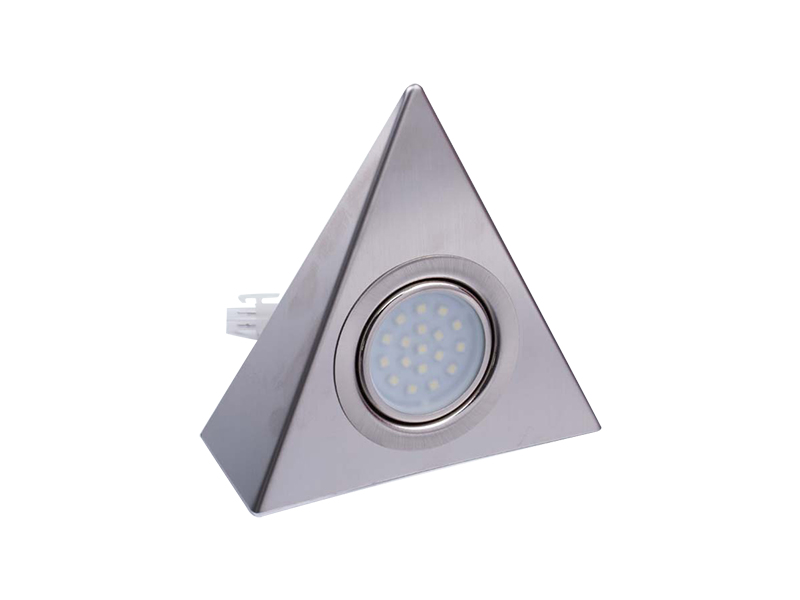
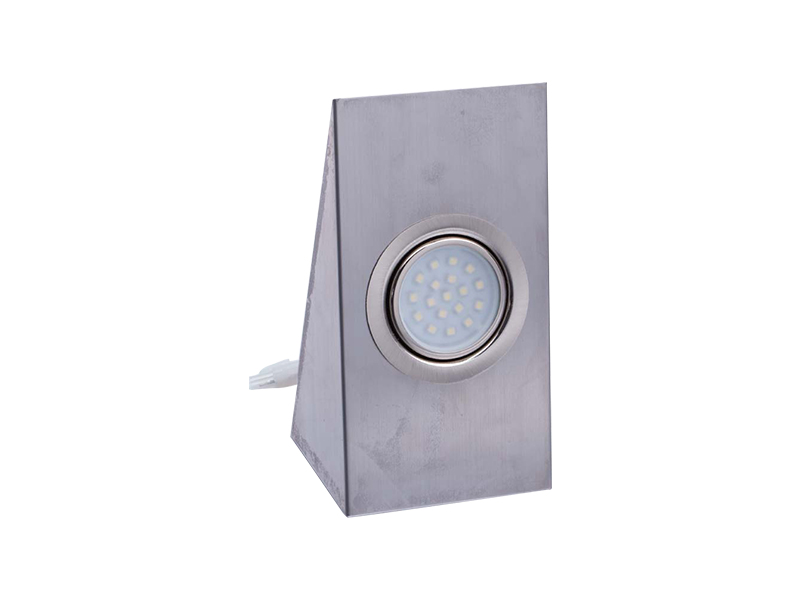
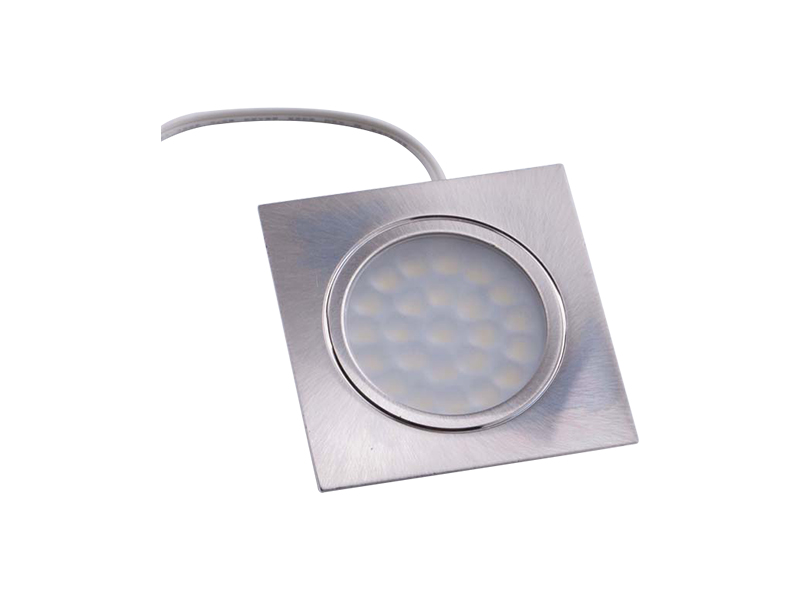
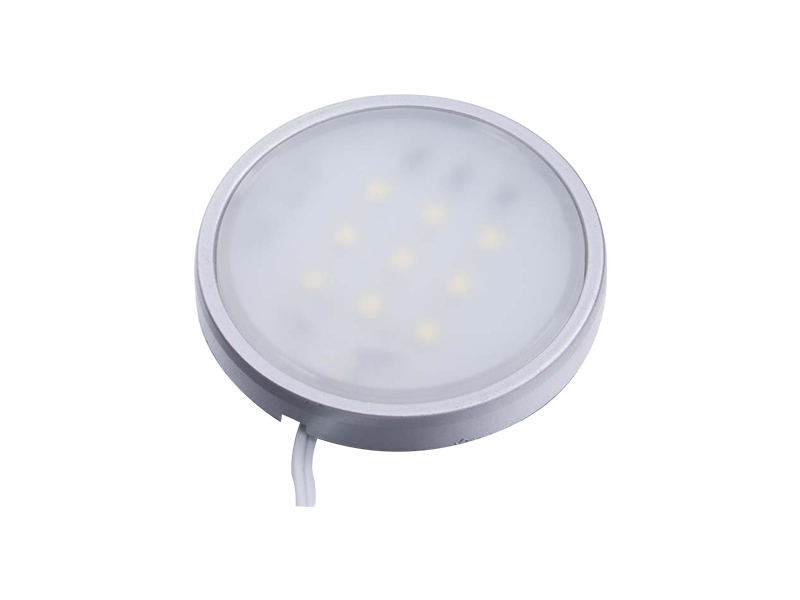
- LED cabinet lights mounted under wall cabinets or shelves add task lighting to the countertop and balance the brightness between the mirror and the rest of the room.
On the wiring side, hardwired fixtures suit new construction and renovations, while plug-in versions fit rental units and quick upgrades. Low-voltage DC models, commonly 12V, need an external driver; driver quality directly affects flicker, colour consistency, and dimming behaviour.
What to Check When Buying or Sourcing in Bulk
For contractors, distributors, and importers, the true cost of a bathroom light is not the unit price but the cost of returns, call-backs, and components that fail after installation. Verify these points before ordering in volume:
- Certifications: the fitting must carry the approvals required for the destination market, such as CE, RoHS, or UL. Ask for documents, not photographs.
- Driver quality: the driver is the component most likely to fail in an LED fitting. Request its rated lifetime and stated failure rate.
- Colour consistency: modules from one batch should sit within the same bin so all fixtures in a project match.
- Thermal design: a sealed enclosure must still dissipate heat. Metal housings and tested operating temperatures are good signs.
- Customisation: if the project needs a special finish, voltage, switch type, or mirror shape, look for a manufacturer that supports OEM/ODM work. A factory such as Eastkey, for example, produces LED mirror lights and LED cabinet lights with sensor, touch, dimmable, anti-fog, and 12V options alongside standard models.
Finally, confirm lead time, minimum order quantity, and the after-sales process in writing. A supplier that commits to responding within 12 working hours is usually also the supplier that resolves defects quickly.
The right LED bathroom light is the one specified against real conditions: the wet-area zone, the tasks performed at the mirror, and the features that get used every day. That is why experienced buyers compare lumens, colour temperature, CRI, and IP rating before they compare prices. Once those four numbers are right, the remaining decisions — style, size, mounting method, and controls — become straightforward, and the bathroom works well for years.


 English
 Español
 中文简体