
 English
 Español
 中文简体
中文简体News
Home / News / Industry News / Under Cabinet LED Lighting: How to Choose the Right Fixture for Your Kitchen
When you prep food on a dark countertop, every slice feels less controlled. This is the most common complaint I hear from people who spend real time in their kitchens. A ceiling fixture casts shadows from your upper body, and no amount of overhead light reaches the work area under the cabinets. Under cabinet LED lighting solves that problem by putting light exactly where your knife and cutting board are.
Once you compare the options, LED becomes the obvious light source. But the category still covers many fixture formats, and the right product depends on your wiring situation, your cabinet construction, and the tasks you perform on the counter below.
Halogen, xenon, and fluorescent fixtures all have a history under kitchen cabinets, but LED solves the three problems that matter most in an enclosed space: heat, energy draw, and service life.
A typical LED under-cabinet light draws between 5 and 15 watts depending on length and output, while a halogen equivalent often consumes two to three times more power and radiates uncomfortable heat. Because cabinet undersides have little airflow, that heat is not just wasted energy; it stresses the fixture and shortens the life of nearby components. LED chips run cool enough to sit inside a closed aluminum profile without that thermal penalty.
Longevity matters just as much. A properly driven LED module operates for 30,000 to 50,000 hours, which covers a decade of daily kitchen use before light output fades noticeably. Fluorescent tubes dim and flicker earlier, and halogen lamps burn out entirely. If you are going to mount a fixture once and forget about it, LED is the only source worth considering.
The physical format determines the quality of the light pattern and the difficulty of installation.
Linear lights run along the cabinet and spread light evenly across the counter. The most durable versions use an aluminum profile that acts as a heat sink, a mounting channel, and a housing for the diffuser. A bare adhesive LED strip can work temporarily, but it collects dust, shows individual LED dots, and has no real thermal management. An angled profile is often a better choice because it directs the beam toward the work surface instead of straight down.
Puck lights are compact round fixtures for focused areas such as a sink, a coffee station, or a mixing spot. They install quickly but produce distinct pools of light, so full counter coverage requires careful spacing.
Rechargeable stick lights mount with magnets or adhesive tape and require no wiring. They suit rented kitchens, temporary layouts, closets, and anywhere an electrician is not practical. A magnetic LED under-cabinet light, for example, can be lifted off its charging plate and clipped back in seconds, which makes a quick upgrade or a rarely used cabinet run easy. The trade-off is runtime; most rechargeable units need charging after several hours of continuous use.
 Wholesale K-003 Magnetic LED Under Cabinet Light Suppliers, Manufacturers - NingNingbo Eastkey Illuminate Appliance Co, Ltd. is China wholesale K-003 Magnetic LED Under Cabinet Light suppliers and manufacturers,■ Inpu...View Product →
| Format | Brightness range | Installation effort | Best use case |
|---|---|---|---|
| Linear profile light | 400 to 1,200 lumens | Moderate; may need wiring | Even full-counter task lighting |
| Puck light | 100 to 300 lumens per unit | Low; adhesive or screws | Sinks, coffee bars, display zones |
| Rechargeable stick light | 150 to 500 lumens | Very low; magnet or tape | Rentals, temporary layouts |
The numbers above are general ranges, not a guarantee for any single product. Always check the rated lumens and beam angle for the exact fixture you plan to buy.
Power delivery is the first decision you need to make, because it determines who can install the fixture and where it can be placed.
Hardwired fixtures connect to the building electrical system through a wall switch or dimmer, which gives the cleanest look because no cable hangs below the cabinet. In a kitchen, where steam and food residue are unavoidable, a low-voltage DC system is safer: a remote driver converts line power to a safe DC level, and only low-voltage wiring runs along the cabinet bottom. A slim hardwired LED under-cabinet light with a separate driver keeps the visible profile thin and minimizes the risk of electrical exposure near water.
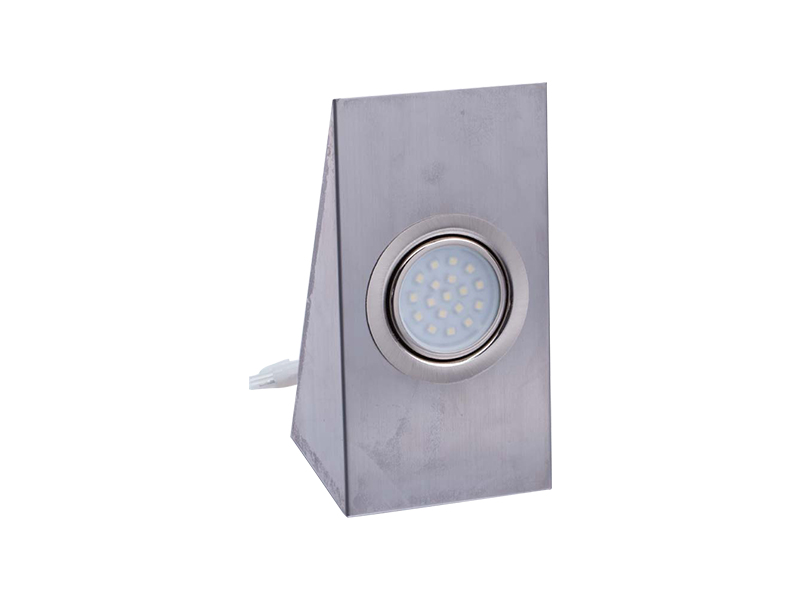 Wholesale DK-015 LED Under Cabinet Light Hardwired Suppliers, Manufacturers - NiNingbo Eastkey Illuminate Appliance Co, Ltd. is China wholesale DK-015 LED Under Cabinet Light Hardwired suppliers and manufacturers,■ In...View Product →
Plug-in fixtures use a transformer that connects to a standard outlet. They are easier to retrofit than hardwired units, but you need a nearby outlet or a switched receptacle, and the cord must be routed neatly through the cabinet.
Battery-powered fixtures eliminate wiring completely. They work well for renters and for short cabinet runs, but runtime is the main limitation; typical units offer between three and twenty hours per charge. If you cook daily with the light on for long stretches, a wired fixture will serve you better.
After format and power source, the specifications that affect your daily experience are brightness, color temperature, and color rendering. Three numbers matter most when comparing fixtures:
For a typical 60-centimeter cabinet, a fixture delivering 400 to 800 lumens is usually enough for food preparation. If the light sits directly above the cutting area, 350 lumens may suffice; if it is mounted near the back wall, lean toward the higher end. A 3000K to 4000K range is the sweet spot for kitchens. Avoid 5000K and above, which can feel clinical in a home setting. Dimming adds flexibility, letting you drop to a warm glow for evening snacking or raise the output for serious cooking.
Installation quality matters more than most buyers expect. The ideal position for under cabinet lights is near the front edge of the cabinet, angled slightly toward the backsplash. This lights the area where your hands actually work instead of creating a bright spot on the counter near the back wall.
If you mount the fixture in the recessed channel at the bottom of the cabinet, the beam will highlight the counter edge and the floor, which looks nice but does little for task visibility. Many professional kitchens mount the light strip just inside the front lip or use an angled profile to direct the beam outward. Before you buy mounting hardware, review the installation precautions for under-cabinet lighting to avoid common mistakes.
Heat dissipation is another layout consideration. Even though LED chips run cooler than halogen lamps, a fully enclosed aluminum profile dissipates heat much better than a sealed plastic housing. Leave a few millimeters of air gap around the driver module, and choose a fixture with a smooth, sealed lens that is easy to wipe clean. An IP44 rating or higher gives extra protection against the moisture that kitchens and bathrooms generate.
The same fixture family helps in other rooms. Under a bathroom vanity, a linear profile light removes shadows on the face and makes grooming easier. In display cabinets and glass-front cupboards, a slim profile light draws attention to glassware without heating the contents. For those layouts, a triangular LED under-cabinet profile light is a strong choice because its angled beam can be directed toward the shelf face instead of straight down, which reduces glare.
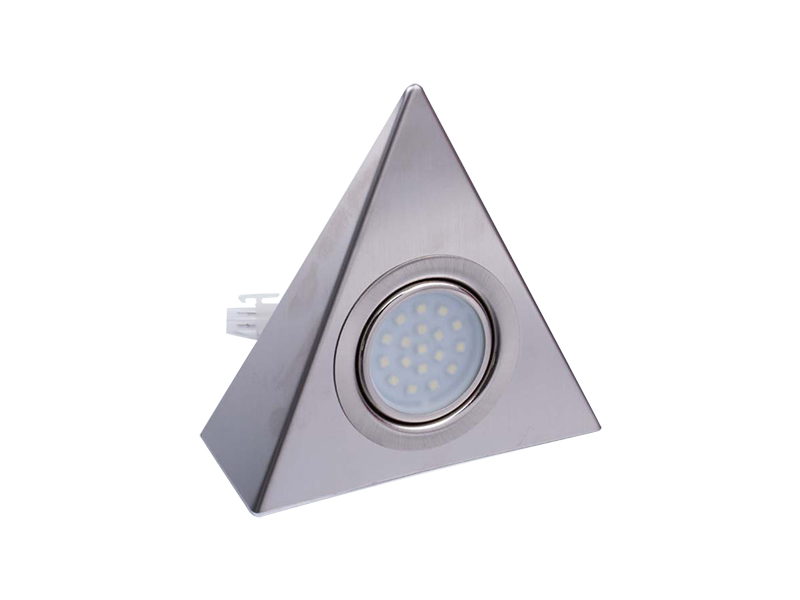 Wholesale DK-014 Triangular LED Under-Cabinet Profile Light Suppliers, ManufactuNingbo Eastkey Illuminate Appliance Co, Ltd. is China wholesale DK-014 Triangular LED Under-Cabinet Profile Light suppliers and manufactu...View Product →
Workshops and home offices also benefit. A row of cabinet lights under a shelf or a tool cabinet keeps detailed tasks visible without adding a bulky desk lamp.
Start by measuring the lengths you need and identifying the power source that is realistic for your kitchen. If you are renovating, plan for hardwired low-voltage fixtures before the ceiling and cabinets close up. If you need a quick upgrade without an electrician, choose rechargeable magnetic units and accept the charging routine. For most permanent installations, a linear profile light with a dimmable driver, a 3000K to 4000K color temperature, and a CRI of 90 or above delivers the best balance of function and comfort.
Under cabinet LED lighting is one of those upgrades you notice every time you cook. The question is no longer whether to install it, but which format fits your wiring, your cabinet depth, and your countertop layout. Once you have those three answers, the right fixture is easy to identify.
top

E-mail:[email protected]

Telphone:+86-574-88073028

FAX:+86-574-88073029
QR code on
mobile phone