
 English
 Español
 中文简体
中文简体News
Home / News / Industry News / Bathroom LED Mirror Lights: Complete Buying Guide to Brightness, CRI & IP Ratings
The halogen bar above the vanity has done its job for years, but the beam is uneven, the metal gets hot, and every shower ends with a fogged mirror. Bathroom LED mirror lights solve all three problems at once: they stay cool, spread light evenly across the face, and consume a fraction of the energy. The difficulty is choosing the right specification, because models range from simple fixed bars to backlit mirrors with touch controls and sensors. This guide explains the numbers that matter, the features worth paying for in a wet room, and the decisions that determine long-term reliability.
Every LED mirror light can be reduced to three measurable specifications: luminous flux, color temperature, and color rendering index (CRI). When these are right, the fixture feels correct from the first evening; when they are wrong, no feature compensates.
Luminous flux, measured in lumens, is the total visible output. For a single vanity mirror up to 60 cm wide, plan on 800 to 1,200 lumens. For mirrors over 90 cm, or bathrooms without ceiling light, target 1,500 lumens or more. Too little light forces squinting during shaving or makeup; too much from a poorly diffused fixture creates glare.
Color temperature, in Kelvin, makes the light feel warm or cool. 3,000 K is the soft warm tone that flatters the face. 4,000 K is neutral daylight, the most common choice in European and Asian bathroom projects, because it does not distort skin tones or clothing colors. Values above 5,000 K read as clinical and are rarely appropriate at home.
CRI scores color accuracy from 0 to 100. At a vanity, choose a fixture with CRI 90 or above. At CRI 80, subtle differences between similar shades disappear, and the reflection becomes a poor guide for the decisions you make in front of it.
| Application | Luminous flux | Color temperature | Minimum CRI |
|---|---|---|---|
| Makeup application | 800–1,200 lumens | 4,000 K | 90 |
| Daily shaving | 600–1,000 lumens | 3,500–4,000 K | 85 |
| Relaxing bath | 300–500 lumens | 3,000 K | 80 |
The bathroom is the only room where lighting shares space with steam and splashes. The IP rating states how much moisture a fixture tolerates. For a mirror light in a typical bathroom, IP44 is the minimum sensible choice. Inside a shower enclosure or directly above a bath, specify IP65. Most mirror lights are installed beside or above the mirror, which falls in zone 2 or outside it, so IP44 or IP65 covers nearly every real installation. Our technical article on how waterproofing affects bathroom suitability goes deeper into this subject.
Moisture also attacks the housing. Anodized aluminum resists corrosion for years; painted steel can pit after a few seasons in a steamy, poorly vented bathroom. Inspect the housing material before ordering, because the driver and terminals inside are only as protected as the enclosure around them.
Anti-fog is a different function from waterproofing. A waterproof fixture survives splashes but does nothing when the glass steams over. Anti-fog mirror lights keep the glass slightly warmer than the surrounding air, using a heated film or the thermal output of an internal backlight, so condensation cannot form. In a home where several people shower before the mirror gets used, anti-fog is the feature that makes a mirror light indispensable. The DK2511 anti-fog bathroom LED mirror light is one example: it pairs a heated mirror surface with even vertical light for daily grooming.
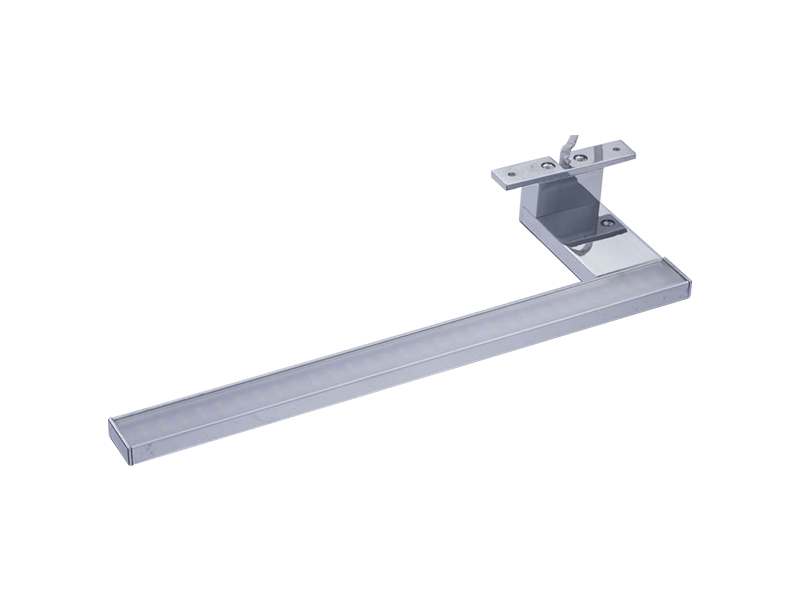 DK2511 Anti-Fog Bathroom LED Mirror Light with Heated SurfaceThis model combines an anti-fog heated mirror surface with vertical LED illumination, addressing condensation in busy bathrooms. Its aluminum chrome or satin finish and multiple color temperatures make it a practical choice for daily grooming needs.View Product →
Once the core light quality is settled, controls decide how much energy the fixture uses and how often you touch it. Three controls deliver the most value in a bathroom.
Dimming. A dimmable fixture runs full output for close tasks and drops to a soft night-light level for late-night visits. Wall-dimmer compatibility must be checked before installation, because not every LED driver works with existing dimmers. The DK2512 backlit LED mirror with dimmable light and defogger combines a built-in dimmer with heating, covering two needs in one unit.
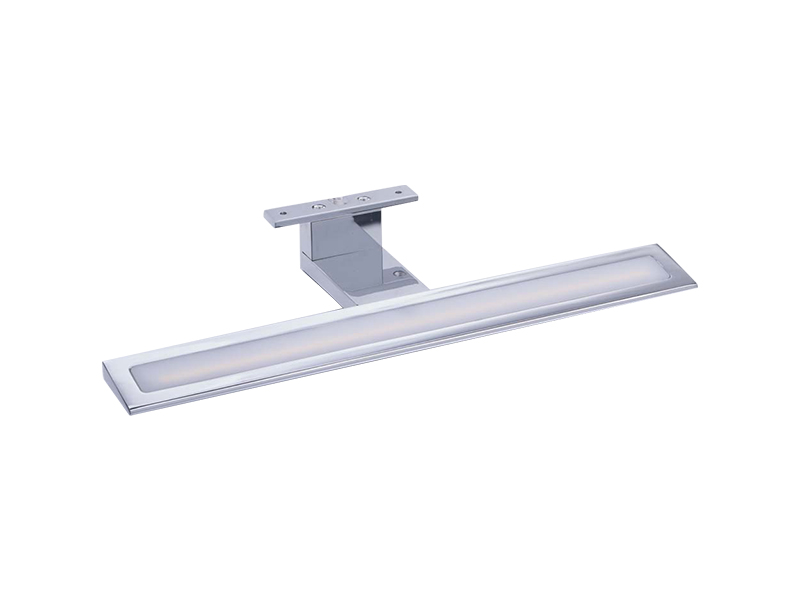 DK2512 Backlit LED Mirror with Dimmable Light and DefoggerThis backlit mirror integrates a built-in dimmer and defogger in one unit, letting you adjust brightness for tasks or night visits while preventing fog. Its higher lumen output and aluminum construction suit bathrooms needing versatile lighting.View Product →
Touch activation. A touch sensor on the bezel switches the light without searching for a wall switch, which is helpful when hands are wet. Many touch models also cycle through color temperatures with consecutive taps, moving from warm evening light to neutral task light without extra controls.
Motion sensing. A motion-sensor fixture lights on entry and switches off after a delay, a good fit for guest bathrooms, commercial washrooms, and family homes where lights are left on. The DK914 motion sensor LED bathroom mirror light is designed for exactly this pattern of use.
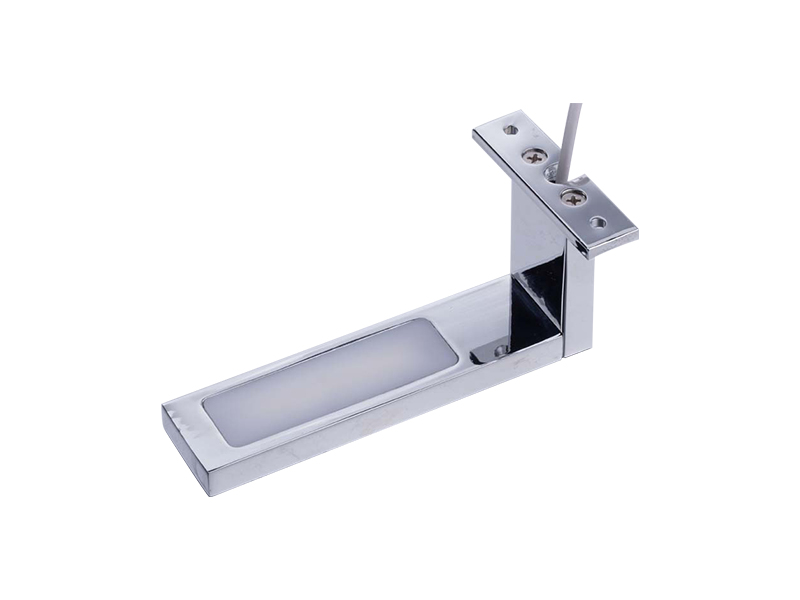 DK914 LED Bathroom Mirror Light with Motion SensorDesigned for hands-free operation, this motion-sensing mirror light turns on when you enter and off after a delay. It is ideal for guest bathrooms or family homes where lights are often left on, with three selectable color temperatures.View Product →
Placement determines the quality of light as much as the LED module does. A single fixture above the mirror is the classic solution, but it casts shadows under the eye sockets because the light comes from above eye level. Side fixtures at eye level, one on each side, give the most balanced light for shaving and makeup. Backlit mirrors emit light from behind the glass, producing a wide, soft wall of light that wraps around the head; they suit narrow bathrooms where side fixtures would be cramped.
Wiring is the main installation constraint. Hardwired fixtures connect to a junction box and look cleaner, and some codes require them in bathrooms. Plug-in fixtures are easier to retrofit but need a socket in a safe zone. Low-voltage 12 V DC systems keep the transformer outside the wet area and reduce shock risk, which is why commercial projects often specify them.
| Zone | Where it applies | Minimum protection |
|---|---|---|
| Zone 0 | Inside the bath or shower tray | IP67 |
| Zone 1 | Above the bath or shower, up to 2.25 m from the floor | IP45 or IP65 |
| Zone 2 | 0.6 m outward from the edge of zone 1 | IP44 |
| Outside zones | Rest of the bathroom | IP44 recommended |
For contractors, hotel projects, and distributors, buying bathroom LED mirror lights is a procurement exercise. The consumer-level specifications still apply, but the process adds verification layers: test reports, driver quality, and sample approval.
Request a datasheet stating luminous flux, color temperature tolerance (typically within 200 K), CRI, and IP rating. Ask which driver is used, because the driver fails before the LED chip in most fixtures. Confirm the IP rating with a test report rather than a printed number, and check whether the housing has passed a corrosion test for coastal or high-humidity projects. A sample order of five to ten units validates these claims before mass production.
Customization separates a useful supplier from a rigid one. A manufacturer that adjusts length, color temperature, mounting style, or branding becomes a partner in the project. The detailed guide to choosing the best LED mirror light for your bathroom covers these criteria from the buyer's perspective.
LED chips are rated for 30,000 to 50,000 hours under normal conditions, but drivers age faster, and heat is the main enemy. Aluminum housings that double as heat sinks keep internal temperatures lower and extend both LED and driver life. Check whether the driver is replaceable; a sealed driver forces the whole fixture to be discarded when it fails.
Cleaning should be gentle: a microfiber cloth with mild soapy water, plus an occasional wipe of the frame in hard-water regions to prevent mineral stains. Abrasive cleaners strip the anodized coating and invite corrosion. With modest care, a well-built mirror light keeps its output and appearance into its fifth year.
A good purchase decision comes down to four checks. Match lumens and color temperature to the vanity and the room. Choose an IP rating for the installation zone. Decide whether anti-fog, dimming, or motion sensing justifies the price premium in your daily routine. Confirm wiring and driver access before drilling. Fixtures that pass these checks are the ones that still feel right five years later.
top

E-mail:[email protected]

Telphone:+86-574-88073028

FAX:+86-574-88073029
QR code on
mobile phone