
 English
 Español
 中文简体
中文简体News
Home / News / Industry News / Indoor Lighting Manufacturers: 7 Practical Checks Before Placing Your Order
Two batches of what looked like the same LED mirror light arrived at a distributor's warehouse on the same afternoon. From the outside, they were nearly identical: frameless, edge-lit, 6500 K. One batch moved through the sales channel without a ripple. The other generated complaints about a noisy driver, uneven illumination, and fixtures that stopped working after the first humid week. The only real difference was the manufacturer behind each batch.
Price per unit rarely reveals that difference. What separates a dependable indoor lighting manufacturer from a costly one is a combination of product range, materials, electrical design, environmental protection, customization flexibility, quality control, and human responsiveness. Here are the seven checks that matter most when you are about to commit an order to a factory.
Indoor lighting is not one product family. Bathroom vanity lights, under-cabinet fixtures, and integrated LED mirror lights place very different demands on housing shape, power supply, and control systems. A manufacturer can be excellent at one category and weak at another. Start by confirming that the factory's catalogue overlaps with the categories you plan to buy.
| Attribute | Halogen Mirror Light | LED Mirror Light | LED Cabinet Light |
|---|---|---|---|
| Light source | Halogen capsule | LED chips with driver | LED strip or compact modules |
| Typical mounting | Wall surface mount | Wall mount or integrated into mirror | Hardwired, magnetic, or portable |
| Controls | Simple on/off | Sensor, touch, dimming, defog | Switch, motion sensor, smart dimming |
| Main applications | Bathroom vanity | Bathroom vanity, makeup area | Kitchen counters, display cabinets |
A factory with a coordinated range across these families usually shares electrical platforms and quality procedures internally, which makes mixed orders easier to manage. When the same manufacturer uses the same driver platform for several SKUs, spare parts inventory stays simple and certification paperwork covers multiple products. Installation details also vary more than you might expect. Magnetic attachment, for example, matters when a fixture must be mounted on a metal cabinet base without drilling holes. A model such as the K003 magnetic LED under-cabinet light is a practical example of that design choice.
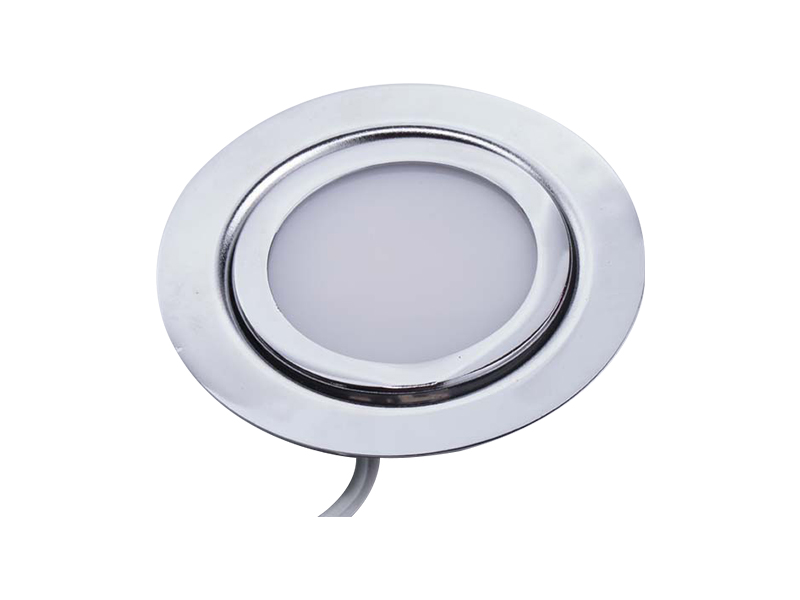 K-003 Magnetic LED Under Cabinet Light with 5050 SMD LEDsThis under-cabinet light attaches magnetically to metal surfaces, simplifying installation without drilling. It uses 5050 SMD LEDs and is available in halogen versions, making it a practical choice for cabinet lighting needs.View Product →
An LED only performs well if the heat is removed from its junction. In mirror lights and under-cabinet lights, the housing is the heat sink. Extruded aluminium profiles and zinc-alloy bodies shed heat predictably, while thin ABS or purely decorative steel traps heat around the driver. Ask which alloy is used and whether the LED board is separated from the driver cavity.
This is not an academic detail. A fixture with proper thermal design can realistically meet its 30,000-hour LED rating, while one with weak dissipation will fade long before that. The influence of light fixture materials on heat dissipation and long-term durability is worth understanding before you finalize the specification.
At a minimum, request the luminaire's declared lifetime at the expected operating temperature, not just the LED chip brand.
Indoor lighting orders usually split by destination market: 120 V for North America, 220–240 V for Europe and many Asian markets, and low-voltage DC for fixtures integrated into furniture. A reliable manufacturer should be able to supply every version without confusing driver boards.
Ask for clear answers on these points before sampling. If the manufacturer cannot state the electrical specification of its own fixture, the risk of customs delays and failed inspections lands on you.
Bathrooms are the harshest indoor environment for lighting. Steam condenses on surfaces, seeps into the driver, and attacks mirror coatings. A bathroom-grade LED mirror light needs more than a plastic lens and a nice frame.
Check the actual ingress protection rating, but also ask how the anti-fog function works. Some fixtures use a heated film behind the mirror glass; others place a heating element inside the housing. A genuine anti-fog light warms the mirror surface enough to stop condensation from forming, rather than simply reducing the speed at which fog appears. A fixture labelled “bathroom” but shipped without a confirmed IP rating should be treated as a decorative light, not a wet-area light. The DK2511 series, for example, combines heated mirror technology with a sensor so the defog cycle runs only while someone is using the vanity.
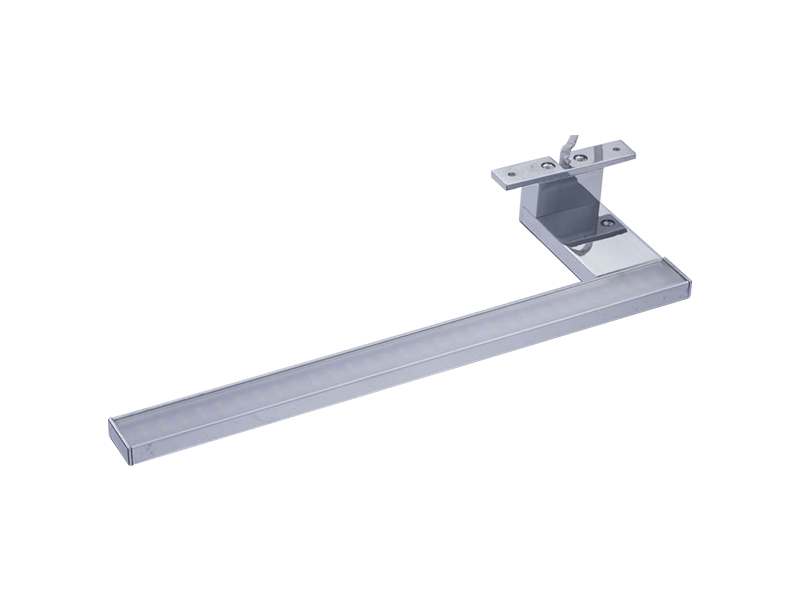 DK2511 Anti-Fog Bathroom LED Mirror Light with SensorThis bathroom mirror light combines heated mirror technology with a sensor to run the defog cycle only when the vanity is in use. With an IP44 rating and 350 lumens, it suits damp bathroom environments.View Product →
Few wholesale orders are pure stock purchases. Buyers frequently ask for different lengths, a specific color temperature, a logo on the mirror glass, custom packaging, or a dedicated voltage. The real question is whether the manufacturer does these changes in-house or subcontracts every single modification.
A factory with its own assembly lines and engineering team can answer customization requests with accurate drawings and realistic lead times. Ask for a photo of a previous similar modification, not just a generic brochure. Customization lead time should be part of the quotation, not a separate surprise. Some aesthetic variations are already standard in the catalogue, such as a vintage bathroom LED mirror light where the classic profile is built around modern LED internals. The DK1505 series is one example of that design approach.
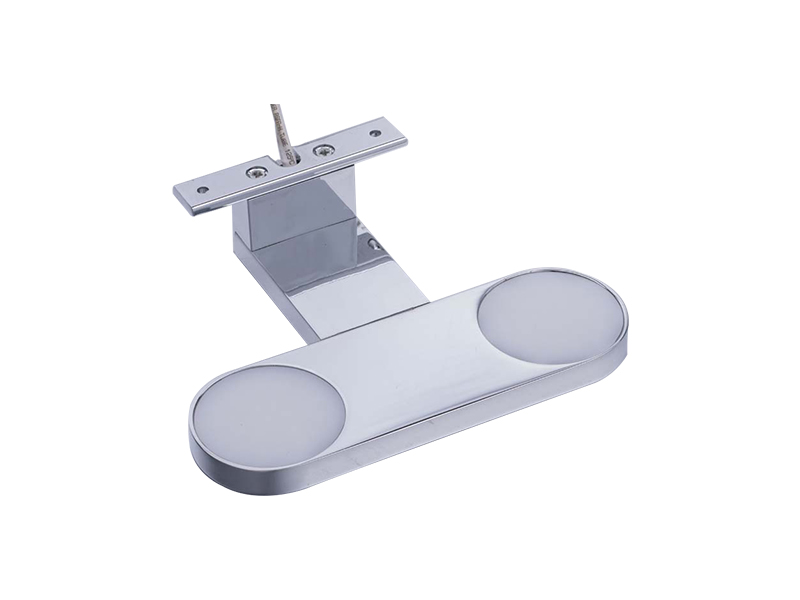 DK1505 Vintage Bathroom LED Mirror Light with Modern LED InternalsThis mirror light offers a vintage aesthetic while using modern LED internals, with an IP44 rating and 330 lumens. Its classic profile appeals to buyers seeking stylish yet functional bathroom lighting.View Product →
A single hand-picked sample means very little. The real quality issue in indoor lighting is batch consistency: the same driver lot, the same LED color bin, the same torque on terminal screws. Ask what tests the factory performs before packing.
Typical production tolerances to confirm include a correlated color temperature range of ±150 K around the marked value and a CRI difference of no more than 2 points within one batch. If the order size justifies it, request samples from three different production lots. If the factory gives specific answers, it has a controlled process. If the answer is only “we check everything,” the risk is still on you.
Response speed is the earliest signal of how the factory will behave during a complaint. A manufacturer that answers a quotation quickly and asks the right technical questions will probably treat a quality issue the same way. A supplier that replies after three days will not become more responsive after your payment.
Look for operating rules you can verify on the first contact. Eastkey, for example, states a 12-hour response window on working days, plus commitments to professional communication, patient replies, and on-time delivery. Whether you buy from Eastkey or from another factory, ask for a written service standard before you negotiate the order. Do not rely on the salesperson's tone; put the response-time agreement and defect handling process into the purchase contract.
Choosing an indoor lighting manufacturer is less about finding a perfect factory and more about removing hidden risks. Check whether the product range matches your sales channel, inspect materials and heat dissipation, verify electrical and certification details, confirm moisture protection, test the customization workflow, assess batch consistency, and measure how quickly the factory communicates. The factory that passes all seven checks will usually cost a little more in negotiation, but it will save more in returns, rework, and lost customer trust.
If you are building this comparison from scratch, one practical way to see these checks in a real catalogue is to look at how a single factory structures its product family. You can browse the Eastkey website and compare its bathroom mirror lights and under-cabinet LED fixtures against the checklist above before you send out your next RFQ.
top

E-mail:[email protected]

Telphone:+86-574-88073028

FAX:+86-574-88073029
QR code on
mobile phone